
What is Customer Acquisition Cost?
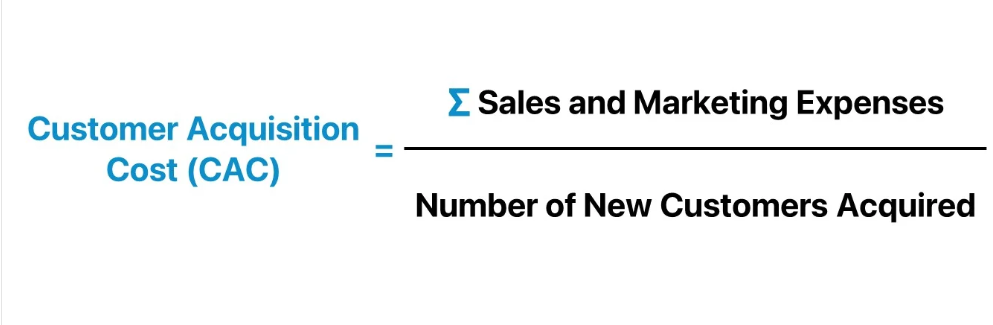
Customer Acquisition Cost (CAC) refers to the total cost an organization incurs to acquire a new customer. In essence, it represents all the resources and expenses involved in persuading a potential customer to purchase a product or service, including sales and marketing costs, as well as supporting assets such as tools, property, or equipment that directly contribute to the acquisition process. CAC answers a fundamental business question: how much it costs to gain one additional paying customer.
As a key business metric, CAC is typically analyzed alongside indicators such as Customer Lifetime Value (LTV) or Monthly Recurring Revenue (MRR). Comparing CAC with LTV helps determine whether the value generated by a customer over time outweighs the cost of acquiring them, while pairing CAC with MRR offers insight into whether acquisition efforts are translating into sustainable, recurring revenue. Together, these metrics provide a clear view of a company’s operating efficiency and long-term growth viability.
Why is Customer Acquisition Cost so important?
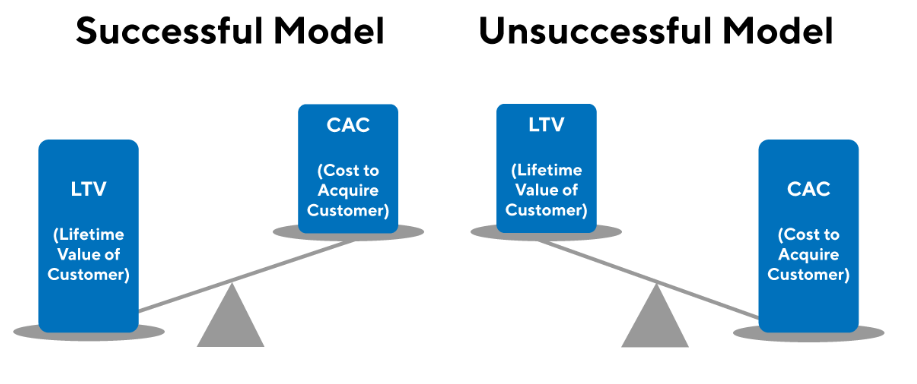
Customer Acquisition Cost (CAC) matters because it tells a very human truth about growth: not all growth is healthy. Getting customers feels like progress, but if it costs more to bring someone in than they will ever give back to the business, that growth is quietly hurting you. At scale, this becomes dangerous. The more customers you acquire, the faster you lose money. CAC exists to make sure growth actually makes sense.
One of the most practical roles of CAC is helping teams understand where their marketing really works. Companies usually invest in multiple acquisition channels—social media, events, ads, partnerships—but intuition alone can be misleading. CAC turns gut feelings into clarity. When you see that social media brings in customers at a much lower cost than social events, the decision becomes obvious: double down on what’s efficient, rethink what’s expensive. This isn’t about cutting creativity; it’s about respecting reality.
CAC also has a direct relationship with profitability and margins. Imagine each customer is worth $60 over their lifetime. Any channel that costs more than that to acquire a customer is fundamentally unprofitable, no matter how exciting it looks on paper. Businesses that understand CAC choose channels that leave room for profit. Businesses that ignore it often mistake revenue for success—until the numbers stop working.
More deeply, CAC acts as a health check for the entire business model. A common rule of thumb is to keep CAC at or below 33% of Customer Lifetime Value. When costs creep above that line, it’s rarely just a marketing problem. It often signals issues with pricing, retention, or product-market fit. In that sense, CAC doesn’t just measure acquisition—it reflects how well the company creates and delivers value.
This is why investors care so much about CAC. Many companies fail not because they lack users, but because they never learned how much those users truly cost. CAC forces honesty. It asks a simple but uncomfortable question: Are we building something that can last?
5 Practical Ways to Reduce CAC
1.Sharpen your ideal customer profile (ICP)
The clearer you are about who your product is truly for, the less money you waste chasing the wrong audience. A tight ICP helps you speak the right language, show up in the right channels, and convert faster—with less spend.
2. Let the product do the selling.
The easier it is for users to experience value early, the less you need to convince them. Strong onboarding, fast “aha moments,” and clear use cases reduce friction and naturally lower acquisition costs.
3. Turn users into your distribution channel.
Referrals, sharing, and word-of-mouth are among the lowest-CAC growth engines available. Design moments where users want to recommend your product—not because you bribed them, but because it genuinely helped them.
4. Improve retention before scaling acquisition.
Leaky buckets kill CAC efficiency. If users churn quickly, every dollar spent acquiring them becomes more expensive. Fixing retention often reduces effective CAC more than launching a new marketing channel.
5. Focus on trust, not just clicks.
Clear messaging, honest positioning, and social proof shorten decision cycles. When prospects trust you earlier, you spend less time—and money—pushing them over the line.